
Finance ministry backs chairman, may remove five govt-nominated independent directors

State-owned Punjab & Sind Bank is targeting salary accounts to boost the share of low-cost deposits. Swarup Saha, managing director and chief executive officer of the New Delhi-based lender, tells Manojit Saha that the bank may see gross non-performing assets (NPAs) fall below 8 per cent if there is resolution of the stressed assets.
The Delhi-headquartered bank had favoured private placement over an initial public offer due to the stock market's volatility, a source familiar with the development said. "An initial public offer now is out of question," the source said. The private placement of shares is likely to be with public sector companies Life Insurance Corporation, UTI and Small Industries Development Bank of India but private sector participation is not completely ruled out.

Public-sector lenders Indian Overseas Bank (IOB) and Uco Bank are likely to raise funds through qualified institutional placement (QIP) next month. Punjab & Sind Bank is likely to follow suit later this financial year to meet the public shareholding norm of 25 per cent. When a public-sector unit raises funds through QIP, the money goes to the company because it involves issuing new shares whereas in the case of offer for sale (OFS), the money raised goes to the government because its shares are sold.

Operations of public sector banks (PSBs) may be impacted as bank union AIBEA has given a strike call for Saturday to oppose incessant outsourcing of jobs. Although the officers are not part of the strike, there may be some impact on cash deposit and withdrawal, clearing of cheques etc. Several banks, including Bank of Baroda and Punjab & Sind Bank, have already informed their customers about the potential impact on services if November 19 strike materalises.

Net NPAs increased to Rs 36,260 crore in the December quarter from Rs 34,843 crore in September and Rs 33,116 crore in December 2023, observes Tamal Bandyopadhyay.

Punjab & Sind Bank plans to offer 5% each to top institutions

PSB may get its first non-Sikh at the helm, vigilance clearances are awaited.
ICICI Bank plans to grow aggressively by opening 60 more branches this fiscal and aims to increase its retail assets to Rs 33,000 crore in 2004-05.

'We plan to launch new initiatives, including cash flow-based lending, to ensure borrowers are not burdened and can access funds more quickly.'

As banks' chase for customers to collect cheap deposits is not fructifying, they are forced to offer inflation-beating real interest rates on fixed deposits now, and state-run banks led by Punjab & Sind Bank tops the chart offering 8-8.50 per cent per annum deposit rate. Banks are forced to offer inflation-beating deposit rates for a tenor ranging from 200 to 800 days as credit growth has been far outpacing deposit mobilization throughout this fiscal, leading to a funding crunch.
The finance ministry is in favour of extending the August deadline for public sector banks (PSBs) as well as insurance companies to increase their minimum public shareholding (MPS) to the mandated 25 per cent, said a senior government official. "The election results will determine the course of action. "Most likely, those who did not receive an extension to meet the minimum shareholding norm will be granted one," the senior government official said.

A week after the Reserve Bank of India (RBI) raised key policy rates and asked banks to restrain loan growth as deposit mobilisation remains slow, three state-owned banks responded on Monday by increasing their benchmark lending rates and deposit rates.
Guru Gobind Singh Indraprastha University (GGSIPU) invites applications for its undergradaute and postgraduate courses for the academic year of 2008-09.
Second-half goals from penalty-corners gave the Punjab side a 2-0 win in their opening match in the Bombay Gold Cup hockey tournament.

Central Bank of India's 21.5 per cent assets are either bad or have been restructured.

Union Finance Minister Nirmala Sitharaman will review the performance of regional rural banks (RRBs) after the Budget session of Parliament, according to two people familiar with the matter. The finance minister will review the performance of RRBs after August 13. The review will include discussions on enhancing the digital capabilities of RRBs, said a senior government official.

Finance Minister Nirmala Sitharaman on Monday said the government would infuse Rs 20,000 crore into public sector banks (PSBs) in 2021-22, to meet the regulatory norms. For the current financial year also, the government had made a provision of Rs 20,000 crore for recapitalisation.

They need money as Rs 100,000 cr deposits will mature by December.

Unlike any other national asset, which is typically sold to the highest bidder, the profile of the bidder is the most important criterion for a licence to bank, and even for acquiring more than 5 per cent stake, explains Tamal Bandyopadhyay.

The annual earnings of a non-executive chairman of a PSB is capped at Rs 10 lakh, inclusive of fees for attending board meetings. This is way below the compensation of the chairman of any private bank, reveals Tamal Bandyopadhyay.

This is part of the first batch of Supplementary Demands for Grants for 2020-21 moved by Finance Minister Nirmala Sitharaman in the Lok Sabha.

The country's largest lender State Bank of India will get the largest sum of Rs 8,800 crore as government's capital infusion.

As the fight for deposits intensifies, the cost of money will rise and the margin will be under further pressure, points out Tamal Bandyopadhyay.

Not all public sector banks are back in the black, but their collective net profit for the year is Rs 32,346 crore against a Rs 9,013 crore loss in the previous year, points out Tamal Bandyopadhyay.

However, despite the surge, the average income of banking correspondents has taken a beating due to the low value of transactions.

A consortium of Indian banks led by the State Bank of India (SBI) returned to the High Court in London for a bankruptcy application hearing against liquor tycoon Vijay Mallya, as they pursue the recovery of debt from loans paid out to his now-defunct Kingfisher Airlines. At a virtual hearing before Chief Insolvencies and Companies Court (ICC) Judge Michael Briggs on Friday, both sides deposed retired Indian Supreme Court justices as expert witnesses on Indian law in support of their arguments for and against a bankruptcy order against Mallya in the UK. While the banks argued a right to waive their security over the Indian assets involved in the case in order to recover their debt in the UK, lawyers for the 65-year-old businessman argued that the funds in question involved public money held by state-owned banks in India which precluded them from such a security waiver.

The cost of deposits is on the rise, but banks can't raise interest rate on close to 60% of their loan books, points out Tamal Bandyopadhyay.

The candidate will be expected to have at least two to three years of remaining service.
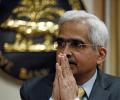
The Reserve Bank of India's rate-setting panel on Wednesday began its three-day deliberations on the next bi-monthly monetary policy amid expectations of at least a 35-basis-point hike in the interest rate to check high inflation. If raised, it will be the third consecutive hike in the repo rate -- the short-term rate at which the RBI lends money to banks. The central bank has already announced to gradually withdraw its accommodative monetary policy stance.

With the rise in interest rates, bond yields have been on the rise; this will dent banks' treasury profits. Also, many retail borrowers may find it difficult to service their loans when the loan rates rise, points out Tamal Bandyopadhyay.

HDFC Bank, the country's second-largest private sector bank, has cut its base rate by 15 basis points (bps) to 9.70 per cent.

The finance minister has said that United Bank has managed to reduce its non-performing assets.
